Wednesday, May 17, 2017

All good things...

This afternoon will be my last shift on the Africa Mercy.

Well, for this year, anyway.

Over the next few weeks, a mass exodus of crew will take place, leaving only a skeleton crew for the sail to Grand Canaria for repairs and maintenance. I'll be departing on Friday, which is also the last day of surgery on board. All of our patients should be leaving the ship the weekend after that.

Yesterday, a local nurse from a nearby hospital came around the wards to meet some of our patients with delayed wound healing, who might need a little more time under nursing care before they are well enough to return home. If necessary, they will be transferred into her care and well looked after.

I think I'm still in denial that I have to leave this incredible place in 2 days, but the process of cleaning and packing up our wonderful B Ward has helped give a bit of a sense of closure.

We might have been a tidge over-enthusiastic with the cleaning.

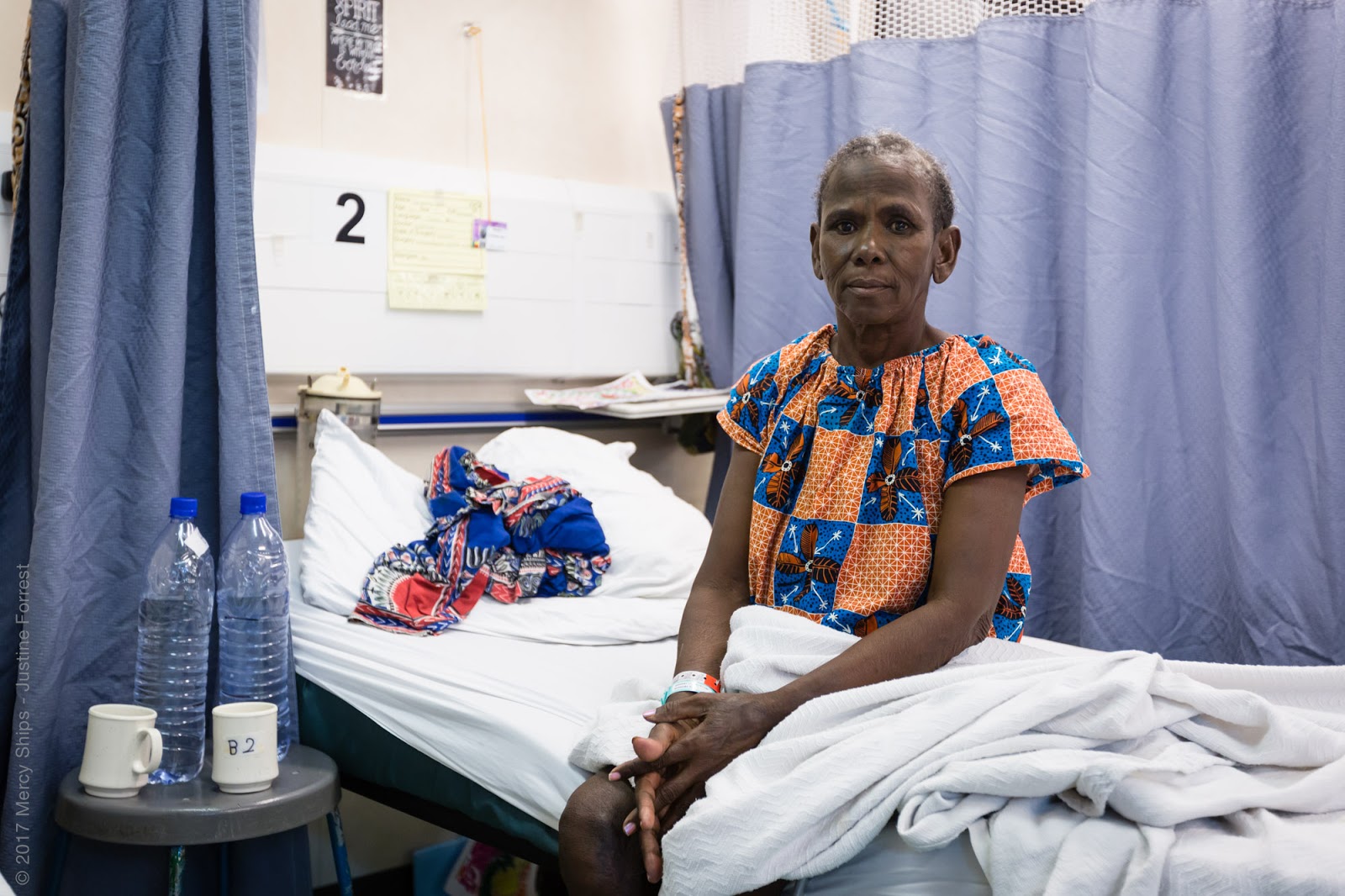
Since one of our adult wards is closing up, the remainder of our General Surgery patients are hanging out on A Ward, as well as our nurses and day crew. I've said it before, and I'll say it again, every single day on the wards has at least one mind-blowing moment. Yesterday, it was seeing a group of 3 men, complete strangers, walking into the ward for the first time, getting some instructions from our Day Crew about how to use the bathrooms (because yes, that is a thing we have to do), then the next thing I knew they were all sitting together praying (in French, so I caught some of it!) for each other, and thanking the Lord for the opportunity to be on the ship.


At another point during the shift, one of the nurses pointed over to the other side of the ward at a young, 11 or 12 year old patient and said, "Look! She's performing surgery on her teddy!" I peeked around the corner to see her knitted teddy laid out on a tray on her lap, and the patient carefully inspecting some pencil crayons before deciding on one to make an incision with. She broke concentration for a second, met my eyes, and grinned sheepishly.

Gosh, I'm going to miss these moments.

It's not all roses and sunshine, of course. There have been incredible highs of encouraging and heart-warming moments, and devastating lows.

My shift yesterday started with some news which left us all choking back tears.

A mother had brought her one year-old baby girl to us, hoping for a miracle. A tumor had grown inside her mouth, making it difficult to swallow, and threatening to compromise her airway if it grew any more. Our screening teams hoped some improvement could be made with surgery, but as is always the concern with fast-growing tumors, worried it could be malignant. As she stayed with us over the last few weeks, her condition became more and more concerning. Confirmation came that the tumor was indeed cancerous. Our team of doctors reached out to local hospitals to try to secure chemo, the only cancer treatment option here in Benin. Just days before she could be transferred off ship to start treatment, she took a turn for the worse. Her respirations were becoming more and more laboured, and her oxygen levels were taking dangerous dips below normal. Imaging revealed the cancer had already spread throughout her lungs.


Rather than endure a treatment that had a limited chance of success, which might cause more suffering than it would prevent, it was decided with the mother to bring the baby home. Our palliative team would do everything possible to help her slip away peacefully, surrounded by people who love her.

She was home not 24 hours, enough to see her family one last time, before her little lungs could fight no more.

Despite what seems like a tragedy, the mother repeatedly emphasized how thankful she was for our help, for doing the best we could to help her daughter, even though it didn't feel like enough.

The death of a child is, sadly, a relatively common occurrence here. That isn't to say that it doesn't still hurt. There is still grieving, there is sorrow, there is anger. Yet there is an ability to accept it and move forward with hope for the future, in a way that is hard for me to understand.


I know, though, that God can bring beautiful transformation out of a tragedy. I have seen it. Time after time. It is so easy to see here...on a daily basis. From hopelessness, to brimming with anticipation.


The real challenge is bringing that vision back home. To see His transformation working in less obvious, but no less miraculous ways. I hope I can.

See you soon, Canada.

À la prochaine, Afrique.

-D

Friday, April 28, 2017

The Long Haul

"She doesn't want to go? Why not?"

I'm confused. My patient, Marthe, has been stuck in an isolation room for over a week. The hospital is already a bit of a windowless pit, but at least there are other patients and caregivers to chat with. The iso rooms cut you off from almost all of the community the other patients share. Marthe had a massive tumor removed from her back, and required extensive skin grafts to fill the space left behind. The chance of infection is high with such a large surface area of tenuous tissue, and Marthe ended up with an antibiotic resistant infection, which could easily spread to other patients with healing wounds. She's finally been cleared to go to the Hope Center as an outpatient, to get out of that windowless room and have some freedom & fresh air, and she said "no." 


After
Before


My translator rattles off some Fon, and as Marthe replies, I catch a glint of defiance in her eyes, but there's something else there too.


Love. Beautiful, compassionate, self-sacrificing love. After a brief dialogue, I get Marthe's response:

"She say that, she don't want to go until the other girl can go too. She don't want to leave her alone."

Next door, in our other isolation room, was a young woman and her daughter, who also had trouble with slow-healing wounds and infection. Although they couldn't physically interact, and it was hard to even see each other, Marthe and the mother would usually spend the day sitting in their respective doorways, keeping each other company.

Marthe knew (from firsthand experience) that once she left, momma next door would be lonely. We do our best to help keep our isolated patients' spirits high; Chaplaincy sits with them for a few hours, the day crew chat and play music for them sometimes, off-duty nurses with hearts of gold come in to blow bubbles and play with the young ones.

But despite our best efforts, there is still a very isolating effect to, well, being isolated.

"I'll...talk to the charge nurse," I tell her, feeling skeptical, but also humbled and astonished at the simple act of kindness I have just witnessed.

As it happens, I'm on a ship full of professionals who place a higher value on such kindness than expediency or quotas, and so, Marthe stayed.

Momma on the left, Marthe on the right.
A day or two later, momma next door made sure Marthe looked her best before leaving the ship, and this beautiful friendship moved out of our steel, fluorescent-lit corridors and into the sunny rooms of the Hope Center.

Marthe's story was recently shared on the Mercy Ships Canada website. In that article, it says that we hardly saw her smile, and yes, that may have been true at times. She had a long and difficult journey. But she sure could celebrate when celebration was called for!

Marthe's long-awaited discharge from hospital!
What else have I been up to, you ask? Well, quite a lot of different things, actually. Our Women's Health program is over, and the last of our 30 or so fistula patients went home in their beautiful dresses a few weeks ago now.

Giving our ladies an Africa Mercy send-off.
D ward is still full of maxillo-facial patients who have had tumors removed or cleft lips/palates repaired. Sometimes flesh-eating diseases have taken away most of our patient's faces, and grafts are used to reconstruct them. I have worked over on D ward on and off, but most of my shifts are still on B ward, which is now full of general surgery. Fairly standard, simple procedures, like lipoma removal and hernia repaires. These are not so foreign, as they are seen often enough at home. The only difference is time. Lipomas at home would be identified and removed very quickly, often in a doctor's office or as a simple outpatient procedure. Here, like everything else, they are left for years or decades, so they get bigger and are a little more complicated to remove. Hernias are pretty much hernias, wherever you go. We have had some fairly young boys with hernias, who were pretty darn cute.

There's a few other patients we have on our wards right now are what you might call "long-termers." These are patients who ended up with some set-backs, or required multiple surgeries to fully restore their function. Large facial tumors often require part of the mandible (lower jaw) to be removed, and a temporary metal plate is put in place to keep the jaw stable. Eventually, once the tissue has healed well enough from the first surgery, a second may be performed to take bone from the hip or ribs and graft it onto the jaw. We've had a few of these come through last week, several months after their initial operation, and most recover well within a few days.

One of our returning patients, here for a bone graft.
One or two, though, are having a tough time getting well enough to go home. Patient J, who had a massive facial tumor removed back in the fall, ended up with an infection in the wound after the second surgery. He had to stay in isolation for several weeks, and just now, as the wound is nearly completely healed, he's begun to have severe nerve pain. Facial nerves are the bane of the max-fax surgeon's existence. Most other tissue can be sliced through without consequence when trying to dissect the good from the bad - but nerves are delicate, touchy things, and they often end up embedded deep within the tumor. Removing the tumor usually means restoring dignity, freedom, and often saving the life of the patient. If any of the facial nerves get damaged in the process, though, they may have difficulty speaking, chewing, smiling, or even blinking. Damaged or irritated nerves can also cause severe pain, which can be unpredictable and incredibly difficult to control. In J's case, this pain has crept up out of nowhere, when everything finally seemed to be going right. We're doing our best to get it under control, but it is going to be tough these next few days.

On a lighter note, a bit of news. I've decided to return to the ship during the next field service in Cameroon! You probably already saw that on Facebook, but just in case you didn't, I'll be back on the Africa Mercy next March. Apparently I miss it already...and I haven't even left yet! I'm particularly excited because we will be starting a fistula clinic in Cameroon, and the women's health program
will be much bigger than it was this year.


In the mean time, as our numbers are dwindling here on the ship, and the end of the field service, and my time here, is coming to an end...my head is full of incredible stories that I need to get written down before I lose all the precious details!

Hopefully more blog posts incoming.


A la prochaine,
-D

Friday, April 14, 2017

Babelfish

I wrote a bit about language before I arrived, but I think it's worth revisiting now that I've been here a while.
While in Mada, French was common enough in the city to get by, but in most of the country, Malagasy was the prevalent language. Thus, a little French helped, but it was better to learn some Malagasy words, and most of us had at least the basics down pat. Misaotra, Madagascar, for having such a beautiful language! I miss it! I was a "casualty" during our last fire drill, and a couple of our Malagasy crew that are still with us carried me down the stairs on a stretcher to the hospital. It was so wonderful to hear them bantering back and forth! I had to resist the urge to smile and say, "Tsara be!" (very good). I was supposed to be unconscious. With a head injury and a hemothorax. It was a fun time. ;)

At least we made out better than that guy in the back!
The fire drill was quite the experience...we learned first hand how genuinely impossible it is to navigate in a smoke-filled room. But now I'm on a tangent.

I'm supposed to be talking about language.

There were a few regional dialects in Mada, but NOTHING like the linguistic diversity in Benin.

Map showing the major dialects of Benin. 
Fon (or Fongbe) is the predominant language in the south of the country, and many Beninoise do speak fluent French, but as you can see, there are MANY more languages. And the older a person is, and the more rural their hometown, the less likely it is they know very much French. While we have an incredible and talented day crew, there are only so many of them that can speak certain dialects. Bariba, for example, which is fairly common in the north, is only spoken by 4 day crew in the entire hospital. When you're trying to schedule for 4 different wards, plus outpatients, rehab, and the OR...well it's just plain impossible to have one of them available all the time. So, when we have Bariba-speaking patients, we often end up trying to cram all of our teaching into the morning shift the day before they are discharged home, in case there's no translator available the next day.

Patient M (on the left) speaks Bariba, but she had her
own sign language she tried to use all the time.
It mostly consisted of wagging her finger at me
the air and putting her hands on her hips.
She's a bit of a sassy one. I love her.
Alternatively, it's not unusual at all to have to borrow another patient to use as an intermediary translator. Sometimes we have 3 or 4-way translation going on to get a message across! You certainly have to be patient while waiting for the day crew to translate what you said into French, then a patient translates that into Bariba, then another patient translates the Bariba into Fulfulde...and then the whole process goes backwards to get the patient's response back to you!

Patient M, a rare exception who speaks excellent English!
Although I'm so used to speaking to my patients in French I often forget! 
The Ward church service for patients is another place where the diverse array of languages is very apparent. The service is usually led by one of our chaplains in English (though her native language is Dende, I believe), then translated by another chaplain into Fon. Although the sound system is usually deafeningly loud, you might sometimes catch a murmuring in the seated crowd. The patients aren't distracted or chatting amongst themselves, but will seat themselves in groups around one patient or caregiver who can translate the Fon into their regional language. I've mentioned it before, but this is another one of those heartwarming examples of the supportive and caring relationships we often see forming in our wards.


Sometimes, however, the language barrier can be quite isolating. We pluck patients up out of their homes and communities and bring them miles away where there may be very few who speak their particular dialect. It was definitely a struggle with patient B, pictured above. None of our translators speak Fulfulde (her language), but when she first arrived there was a younger woman in the next bed who was able to convey things to her, and kept her in good spirits. B had to stay about a week longer than her, however, and it was a tough week. We did our best to communicate with gestures and the occasional help of a caregiver from another ward, but for most of the day she had no one to talk to. She smiled very rarely, but when she did, she did so with her whole face. Half the time I think it was a, "boy these yovos (white people) are WEIRD" smile, but a smile none the less.

The one time she consistently smiled was during our routine walk/sing/dance in the hall time! The best way to get African ladies out of their beds is with a good djembe beat! B danced her way into the dress ceremony last Sunday, shared her story (which was translated by a patient to a day crew and summarized for us in English), and I had the honor of presenting her with a parting gift bag.

The bags contain items that are both practical and symbolic, as they start a new chapter in life. Soap, moisturizing lotion, and a mirror. Soap, to represent the cleansing of sin, and the washing away of the smell that used to haunt them. Lotion, so that they may have smooth skin like a bride preparing herself for the Bridegroom. And a mirror, so that they can see the beauty that is (and has always been) inside and out.

Debbie, one of our fantastic Charge nurses, handing out a gift bag in Mada
I am thinking of patient B often this week as she will soon return to her farm in the north to tend to her cows. I hope she finds new joy and peace in her life from now on. And I hope, as we urge all our fistula patients to do, that she shares her story to help raise awareness about the condition, how it can be prevented, and that there IS help available for those who suffer from it.

Oh dear. I've run off on another tangent. It's almost like when I ask the day crew to translate, "are you having pain," and the patient prattles on for a full minute in response. It's a very common reaction to simple yes or no questions, somehow. Oh well. I suppose I should wrap things up for now.

A la prochaine!
-D

Friday, March 31, 2017

Pivot

This post might be a bit text-heavy, but I promise I'll make up for it at the end.

A woman of child-bearing age in Benin has a 20% chance of dying from a complicated pregnancy.

Infant mortality as a result of a complicated delivery is among the top 10 causes of death.

Another common outcome of these complicated deliveries is the obstetric fistula (OBF) or Vesico-Vaginal Fistula (VVF).

OBF is an epidemic, but its victims are a nearly invisible population. Many will become a shadow of their former selves; the ever-lingering odor of urine making them undesirable as a wife, an employee, or even sometimes as a member of the community. Most are relegated to small, makeshift dwellings outside their former home, and rely either on the pity of their family, manual labor in open fields (where the smell is less noticeable), or just plain begging. In many places, certainly here in Benin where Vodun is so prevalent, the condition can be seen as a curse for some great wrong the woman must have done. Perhaps the child was conceived through an extra-marital affair, and this is punishment for her adultery. They are forced to watch the world they used to be a part of from the sidelines. Finding them, letting them know there is help, and that that help is free, can be a challenge. We know there are more women out there, but we had to cut our OBF service short as we simply couldn't fill all our slots.

I've said it before but I'll say it again: the change that happens during the weeks these ladies are in our ward is impossible to miss. Healing a fistula is not simply about repairing the physical damage, but also the emotional, psychological, and social wounds.

Yvette, who had lived with a fistula for over 30 years.
We cannot undo the years of shame and stigma these women have endured, but we strive to show them that they have value, they are loved, and they can be part of a community again. Watching them slowly break out of their shell, sharing their stories with each other, nervous skepticism turning to cautious optimism and then joyous confidence... It is a blessing to be able to witness the transformation. They realize they are no longer trapped in a nightmare - their time here is a pivot point on which their whole story may hinge.


This week our Women's Health program is winding down, and we will soon be transitioning to general surgery. The last few fistula patients will receive their new dresses this Sunday, and have an opportunity to share their stories. It is a joyous occasion, but my heart breaks thinking of the few patients we were unable to help. The damage may have been too extensive, leaving so much scar tissue that the repair cannot heal. What's left of their urethra and the surrounding muscles may have been too little to ever regain any bladder control. Countless factors are working against a successful repair, and unfortunately about 10-15% of the time the first attempt fails. The failure rate only goes up with subsequent attempts, as there is now more scar tissue to deal with.

I had a patient this week who left us unhealed. I shared some tearful moments with her - both of us wondering what her future holds. It is difficult to be honest sometimes. And difficult not to give someone false hope. We encourage them to continue practicing pelvic floor exercises, which has a small chance to improve their continence, but is no guarantee. There is also a hospital in northern Benin which performs fistula repairs for "a low cost," but again, with repeated attempts, there is a poor chance of success. I know it is impossible to fix everyone, but my prayers are clinging to the sliver of hope that remains for these women. And sometimes hope wins out - one woman whose repair we thought had failed just had her catheter out today and has been dry! The next few days will be telling.


While I carry sorrow for those we couldn't help deep in my heart, the present events call for rejoicing. Every healed woman is getting a brand new start in their life, and our symbolic presentation of a new dress is a momentous celebration that cannot be truly conveyed through pictures or words.

Nonetheless, I'll try.

Leontine getting her first look at her stylish outfit.
I must say, the loud and vibrant West-African styles are certainly more memorable than the dresses we had in Madagascar! Fabric is sourced at the local market then sewn and fitted by a Beninoise seamstress. The result could be worn on the runway - the ladies are gorgeous!

Singing their way into the ceremony!
Rose thanks her surgeon, Dr. Andy Norman. A man with a Texas drawl and a very big heart. 
How they get those headwraps to stay on is beyond me. 
Our B Ward nursing team, along with Dr's Andy and Carron, and our first three "graduates." All smiles!
Thanks for sticking with me; I told you it would pay off. :)

Well I'd better go - my laundry slot is coming up. Thank you all who are reading this again for your support from afar. Ivanna (pictured above on the front left) and her husband were saying to me just yesterday, "It's just impossible that this place works at all. Yet it does! It always does." The odds are never in our favour, but there is a bigger force at work that is.

Must go now so I don't miss my laundry slot!

Till next time,
-D

Tuesday, March 21, 2017

Underbelly

Last week I had the opportunity to tour the engineering decks of the Africa Mercy - areas normally off-limits to most of the crew.

I wish I could remember all of the statistics our guide shared with us, they were all mind-boggling, but I'll include the few I know for sure.

My cabin is in the forward section of Deck 2, but the rest of Deck 2 and all of Deck 1 make up engineering. Our tour started around Deck 2 midships, where most of the monitoring and control systems for the ship are housed.

Generator control panels
The ship has been retrofitted with 4 generators, two of which are running at all times to provide power. At sea, the engines would normally power the ship, but in port they only run the engines every few weeks for a brief test. 

Main engine controls
Bridge command indicators and throttles
Thousands of litres of fuel are consumed each day to keep the generators running. 

Two types of fuel, along with drinking water and waste water, are stored on Deck 1, and their levels are monitored and controlled from this room as well, in order to keep the ship from listing too far to one side or the other. 

List indicator - seems quite stationary at 0 even when the ship is noticibly rocking.
I can't imagine what it's like when it gets over to 5 or 10 degrees!
One of several drinking water tanks.
The ship can hold up to 1 million litres of fresh water. Our supply in port comes from ashore, but it is filtered, chlorinated, and filtered again before it goes into circulation. 

Our waste water must also be processed before it can be released into the port's waters. Ordinarily, waste water cannot be dumped so close to shore, but since we're sitting here for 10 months, there's really no where else for it to go. Thus, the AFM is outfitted with a more intensive treatment system than most ships.

One of two very large treatment tanks.
Rubber boots for scale.
And for removing things that aren't supposed to be flushed. 
The fire suppression system is pretty impressive. The sprinkler system runs throughout every area of the ship, of course, but down in engineering there is also a CO2 foam system - that will kill you much faster than a fire if you happen to be trapped in the same compartment. There are indicator lights throughout engineering that tell you if there is a phone call, or if you need to put on your breathing apparatus.

Sprinkler system tanks - along side a portable fire extinguisher.
There are areas in engineering, namely, where the fuel is stored under pressure, where if there was ever a fire you'd basically be insta-dead. 

Here is the most important thing in engineering:

Air conditioning.
Obviously most ships have to be self-sufficient when they are sailing, but most end up at a major port city (in a developed nation) more often than the AFM. So there are quite a few engineers dedicated to maintaining, repairing, and sourcing replacement parts. Most parts can't be supplied by our host countries, so if we need something we don't have, it'll take 2 - 4 months to arrive on the next container shipment. Our guide Charlie's main job is managing Stores; ensuring we DON'T end up in that situation, and we always have what we need.

Maintenance & Repair Workshop

Another important role that engineering plays is medical waste disposal. In the hospital, the amount of waste we generate is minuscule compared to a western hospital. We sanitize and re-use as much as is conceivably possible, destroy anything that should NOT be re-used (such as IV bags, medication bottles, etc), and dispose of most of it in a dumpster in the port. Sharps and glass vials are turned over to a reliable local disposal company. So what remains? Any waste that is contaminated with blood, body fluids, or tissue. This is usually 2-4 double-bagged bins of waste per shift, per unit. Probably more than that in the ORs. Here is a whole day's worth:

Although, I think this pile was bigger when we first walked through.
It takes one of the engineering crew ~ 4 hours a day to manually drop each bag into the incinerator, which burns at 850 °C.
Incinerator peep hole. AKA the window into the fiery abyss.
I mentioned the generators before - here's one of the 4 with me for scale:


Here's a little clip to give you an idea of how loud it was down there:


And now for the thing you've all been waiting for...the engines.

Actually, I lied. These are just the oil pumps for the engines.
 THESE are the engines:

It's awkward posing when you can't hear anything the photographer is saying...
This is one of the ship's 4 engines, each with 16 cylinders, which together power 2 massive propellers.


One more artsy shot before we climb through the 8+ decks up into to the "funnel;" the blue tower housing all of the exhaust stacks, including the engines, generators, and incinerator.


For reference:

The funnel. Mmmm...smell those lovely fumes.
Before you fret, the incinerator burns quite hot enough to ensure nothing toxic remains in the output. Nothing beyond your standard carbon smoke, in any case. The stacks also rise quite a ways above where we were standing, and compared to the oppressive heat of the engine room, the funnel is a lovely breath of fresh air!


A different perspective on Deck 8! You can see our lifeboats, radar, and bridge comms tower.
Well, that's the tour, folks!

It certainly gave me a huge appreciation for the conditions the engineering crew soldier through every day...often working below the engine room floor in cramped access crawlspaces. And it is HOT down there. At least as hot as the mid-day African sun.

Meanwhile in the hospital...

A Ward is now full of young cataract patients, who, unlike the adults, require a bit of anaesthesia and recovery for their procedures. Some developed problems due to poor nutrition or injury, while others were born with the condition. They are as curious as any kid, but they sense with their ears and their hands - and will get their hands on anything they can - including your face!

I'm looking forward to the next celebration of sight - it should be a fun one.

Five more ladies participated in the Dress Ceremony on Sunday! Most are now home or resting at the Hope Center until their follow-up appointment, but they are DRY. One of them for the first time in 30 YEARS.


Those smiles bring tears of joy to my eyes every time.

Please pray for the 5th lady who is still on board to receive IV antibiotics. She has a very tiny hole remaining, and needs all the help she can get to be completely healed and free of her burden. She also speaks a dialect that very few of our Day Crew or other patients speak, and though we do the best we can, she does not have the benefit of the same friendship and community that the other ladies form. The psychological healing is just as essential as the physical when it comes to obstetric fistula.

I'll keep you posted.

-D