Wednesday, April 25, 2018

The Be-Guinea-ng

First off, sorry. I can't resist puns.

Now that that's out of the way, I want to talk about the work that goes on before the ship even arrives in a country. Exciting things are happening this week in preparation for the next field service in Guinea, during which I'll again be serving for a few months (Jan-March)!


This will be the 6th time that Mercy Ships has visited Guinea (not to be confused with Guinea-Bissau or Equatorial Guinea...or Papua New Guinea); the last visit being in 2012. Interestingly, when we return to a country or region a few years down the road, there are some patients who we've asked to return for additional reconstructive work - things that we just can't get done within the limited time we have in each field service. Sometimes these years are needed to allow the necessary bone growth and healing before one final corrective procedure. I've heard amazing stories from Dr. Gary Parker (who has served with Mercy Ships for almost 30 years), who, by the way, is almost certainly the most humble and genuine surgeon/chief of medicine I've ever met. I was floated to D Ward yesterday, and amidst the chaos while he was rounding on all his patients, he stepped aside to where I was pouring meds and shook my hand; "I'm Gary, nice to meet you." Can't say I've met many surgeons who would even notice when a new nurse showed up in their work setting, let alone single them out to make sure he knew their name. Back to his stories, though. There are patients he operated on 10 or 20 years ago, babies whose cleft lips he's repaired, who have brought their own children to him for the same procedure decades later. And he remembers them.

The man is a legend.


Back to Guinea, though.

The reason it's very much on my mind is due to the departure of the Advance team this week to begin preparations for our field service.


 The advance team will begin the process of selecting then renovating clinic and screening sites, establishing immigration and port authority agreements, a berth space for the ship to "park" in, and interviewing & hiring over 200 day crew who will be our backbone once we arrive. They will also liaise with local hospitals and professionals to identify other needs that we can help address with our Medical Capacity Building programs.


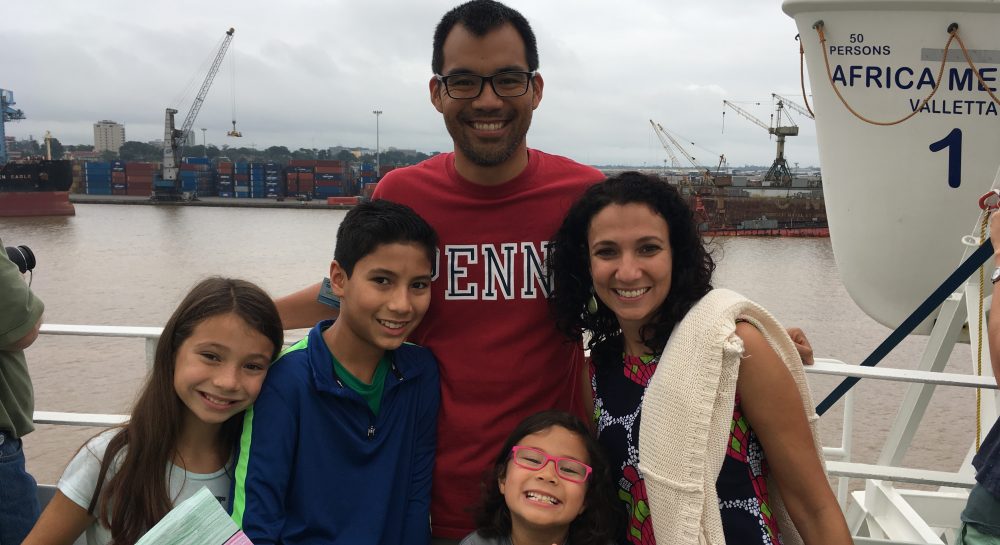
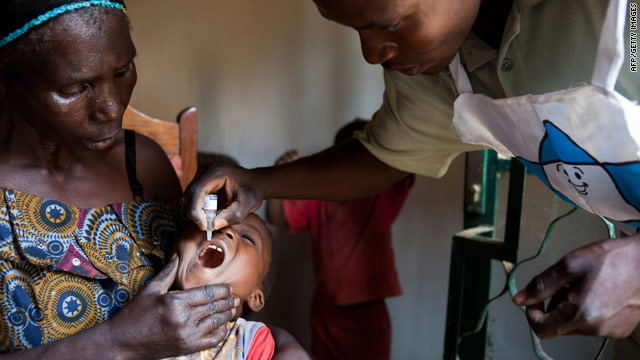
Shortly after the ship's arrival in Guinea in August, the Screening Team (pictured above) will begin the arduous pre-screening process; assessing thousands of potential patients to determine who we can best help in the time we have. Of those many thousands, 2,000-3,000 will be given an appointment card to return and meet with a surgeon who will then make the final decision if surgery is in the patients' best interest.

Meanwhile, in Cameroon...

The last Women's Health surgery was last week, and our ladies are slowly trickling out of the hospital. A few have been re-admitted, unfortunately, due to inexplicable infections. Far more than could be coincidental - but despite a hospital review board, in which nurses, team leaders, surgeons & hospital physicians all scoured each case to find some common denominator, we just couldn't put a pin in the cause. They've all begun to rally, however, and we're happy to see them progressing in the right direction. 


Although there will be no more dress ceremonies in this field service, the memory of those joyous celebrations echoes in all the work we do. We still see the odd familiar face here and there at the Hope Center or on the dock for their follow-up appointment.


We're transitioning into General Surgery, now, which means our Women's Health team is going to be a bit scattered, mingling with the other wards.

I feel your pain, Mary.

We have an amazing team, though, and I'm just being over-dramatic. Most of us will still be working together.

If you can call it working...


À la prochaine.

Monday, April 16, 2018

Whispers & Weavers

I sat on a bench, surrounded by patients and their caregivers, some familiar, some not. I found myself getting frustrated with the murmuring going on all around me. Why aren't they paying attention? This is good stuff! The Day Crew of the Hope Center were telling the story of the ten lepers. Of the one leper who returned to thank Jesus for his healing. Asking good questions - and getting great responses from the audience. Why didn't Jesus just heal them on the spot - why send them to the priest? Why did only one, the Samaritan, return? The parables that are shared in the Hospital and Hope Center services always seem to revolve around healing. I suppose it is a subject that everyone here can relate to in some way. I wonder if it is wise to put such an emphasis on it though.


There are so many other important things Jesus taught us...but maybe the story isn't really about healing. Maybe that's just the top layer of a much deeper point. But - ugh. Why are those guys chatting again??

I turned in my seat to notice a few clusters of people in the crowd, their heads huddled together as they spoke. Abruptly, I remembered the same phenomenon in Benin. I'm an idiot. They're translating. 


There are just so many different languages in this part of the world that one or two translators with microphones simply won't do, and it's incredibly inefficient to wait through the 5 or 6 or more it would take to cover all the languages needed. Instead, the translation process happens much more organically. The people who share a language sit together, and one or two among them, who also speak French, translate quietly as the speaker continues. It is the United Nations of  the developing world - many different cultures all hearing the same message at the same time in their own tongue.


Perhaps this, too, has a deeper meaning to it - or this could be a bit of a stretch - but bear with me.

My initial irritation at the noise in the crowd was a little self-righteous. I was preoccupied with the apparently disrespectful behaviour, the distraction to all those around me trying to listen. In reality, however, half the audience would be unable to listen, to receive the message, if it weren't for this noise. I (for the second time in this exact circumstance) completely misjudged the situation. I was looking at it from a western perspective. A Canadian perspective. One in which politeness is so emphasized we don't even turn around and hush the people talking during a movie - we just sit there and stew about it till the credits roll. All the while, my annoyance is distracting me more than the noise itself.


It is very easy to look at the surface of cultural norms that are so very different from our own and see only rudeness or disrespectful behaviour, when the reality is often the complete opposite. It takes time, patience, research, and sometimes a willingness to make a fool of yourself to get to a place where something very foreign can be seen with a modicum of understanding and respect.

I am slowly inching my way there, but it isn't easy to overcome preconceptions that are so ingrained in my worldview. I am trying, though, trying to learn to challenge my assumptions when I read a headline or meet a newcomer from another country.

---------------

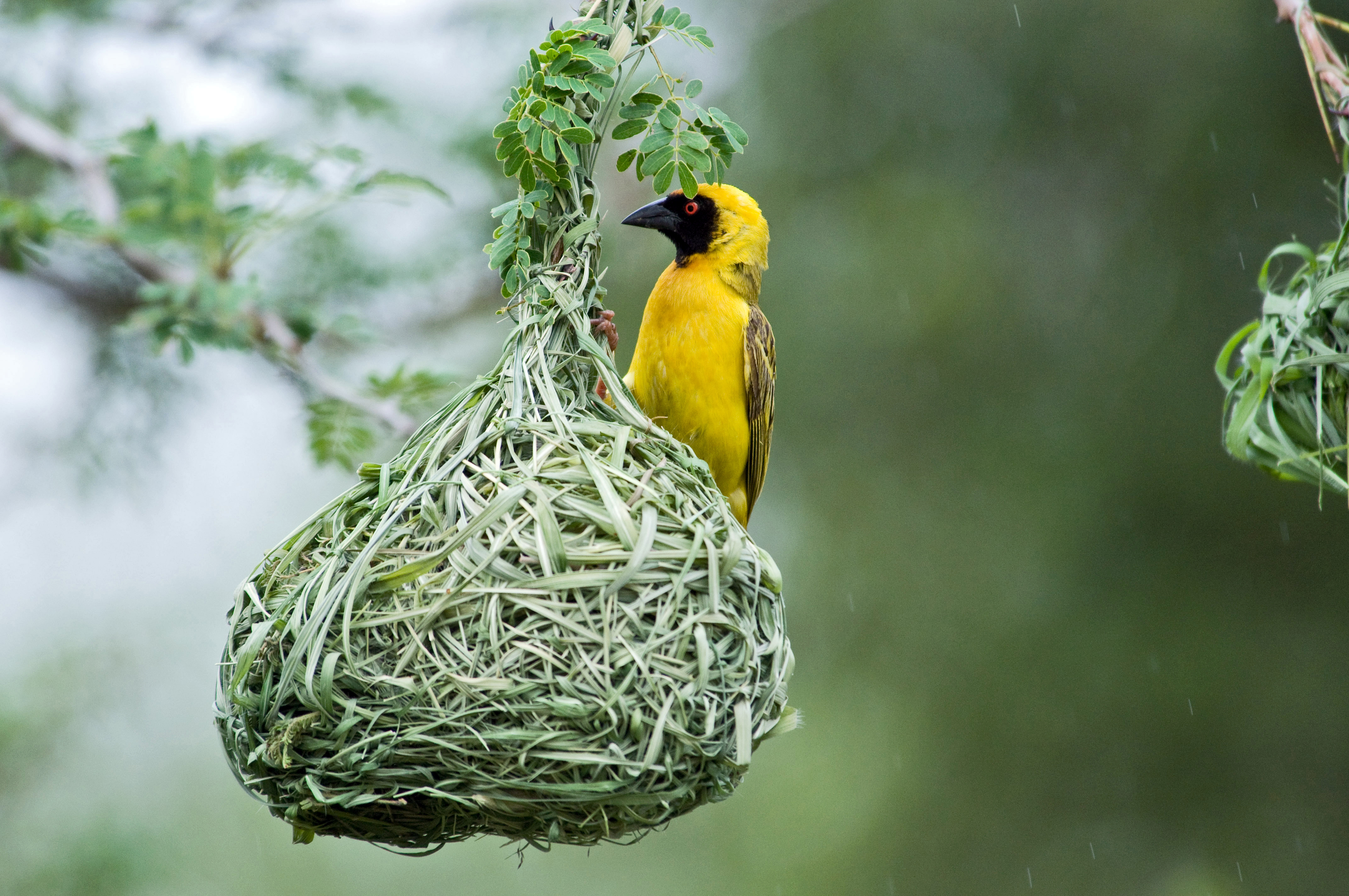
The discussion carried on, and my distraction was shifted to these little yellow birds flitting in and out of a nearby tree; long strands of grass trailing behind them. The birds were familiar - there are often a few to be found on the upper decks of the ship - but their current preoccupation was new to me. I marveled as I noticed the structures they were constructing with all this grass. Southern Masked Weavers, I now know they're called - and I was a bit entranced with their grace and ingenuity. It seemed to echo the work we are trying to do here. We aren't building permanent edifices, or trying to change the structure of the tree. Instead, we create a temporary retreat - a place to hide from the rain, from prying & judgmental eyes, to be loved, cared for, and to emerge with new purpose and potential.


After the meeting concluded with a beautiful poem, written by one of the Hope Center Day Crew (which, I might add, rhymed in both English and French!), we had more joyous singing and dancing, followed by some somewhat bitter-sweet goodbyes. Many of our fistula patients were here for their last few days, awaiting one final follow-up appointment before they would leave Douala and travel far north, back to their homes. I'll almost certainly never see any of them again, except in photos. One patient excitedly ran inside then back out to show me photos of her in her dress at the ceremony. A truly beautiful woman (as all of them are), who has an easy smile, one that shows in her eyes. A beauty that I hope she now knows can never be taken away from her - no matter what the future holds. A beauty that fills her, inside and out, in the knowledge that she is loved.


It always comes back to love.


À la prochaine.

Sunday, April 8, 2018

A Family That Floats Together...


This post is going to be a bit of a cheat, because I'm not going to write anything. Instead, I'm just going to let you listen. I sat down with one of the long-term crew to get a different perspective of life here on the ship, and we recorded our conversation for your listening pleasure.

If you want to read more about the Barki's wild and wonderful life, check out their blog:            barkisonboard.wordpress.com

There were half a dozen kiddos in the vicinity, as Jamie was supervising computer time while we chatted, so I apologize for the background noise - but I think it makes for a more authentic experience. Quiet moments can be rare and hard to come by around here! It starts out rather noisy, but it does get better as it goes on. I promise.

*EDIT* I forgot to ask Jamie her favourite new word that she's learned since being here - I can't say I was surprised that she picked "Azafady." Click here to learn why...

I'm still just figuring things out, so feel free to give me any criticism or suggestions you might have, I'll do my best to improve and build on this early process. I also recognize it was a bit longer than the popular vote suggested on facebook, but I think the conversation warranted a little more time.

I've got an actual blog topic rolling around in my head, so stay tuned for that post sometime soon.

Till then, à la prochaine!

Saturday, March 24, 2018

Right-Side Up

Greetings, from across the pond!

I've been on board the Africa Mercy for a week now, and it probably goes without saying that every week here is packed with eventfulness.

My week consisted of 1 day of orientation/unpacking, 4 day shifts, 1 dress ceremony (where we celebrate the healing and the beauty of our fistula patients), and 1 Canadian Crew night out! Dr. Sherif Emil, a pediatric surgeon from Montréal who is here right now treated (most of) us Canucks to a lovely dinner; all the hosers in one place. You can read all about Dr. Sherif's experiences in the OR here.

Dr. Étienne (L) & Dr. Sherif (R)
It has certainly been a whirlwind of reconnecting with some old friends, seeing some just in passing, and meeting a lot of new and wonderful crew. Oh. And have I mentioned how it still feels weird but wonderful to call a physician by their first name? One of the many ways the communal nature of this workplace reveals itself.

Right now, the singing of day crew and patients is reaching me in my cabin (through several steel doors), and that sound will never cease to put a smile on my face.

Smiles and singing and dancing abound in a dress ceremony from a few weeks ago.
We also had the opportunity this week to gather together with all of the medical teams to hear and share stories from the past month or so. Most were pretty humorous - language and cultural barriers lend themselves to creating ridiculous situations. Like the woman who couldn't understand she needed to stand on the weigh-scale in admissions and repeatedly squatted down on it. One story in particular, however, stood out to me:

Patient D is a man with severe ankylosis - a condition that causes fusion of joints. His jaw was so severely fused that he'd been unable to open his mouth for 19 YEARS. When he was recovered from surgery and had his tight bandages removed for the first time, his reaction was one of pure glee. They had some video of this which we were able to see during a community meeting - and this is no exaggeration. His hands were raised in the air in joy, he repeatedly stretches his mouth open and closed, and though he is difficult to understand (speech is understandably affected when you can't move your jaw for that long), you can hear the release of almost 2 decades of pain, locked away in his own body. Apparently, this went on for over an hour.

It has taken no time to remember why I love it so much here.

Lives are turned right-side up like this every day, and it is just so humbling to be able to witness it.

Just a short little update for you today; more to come.


Á la prochaine, my friends.

Sunday, March 18, 2018

Interlude

I'm sitting in the departures area of Heathrow Airport right now, at half-past midnight, waiting for the check-in desk to open in a few hours. Most of the limited seating has been taken, and more than a few of us are parked along the large windows that look out to....more airport. A few minutes ago a fellow made his way along the terminal, asking each person waiting for change for a tube ride home. I handed him what loose change I had in my pocket. What seems like odd denominations of money to me - 50, 20, and 1p coins.

"Won't be needing this anymore. Get home safe."

I wonder briefly if he will really use that for tube fare - then chide myself for it. If he's willing to wake half-sleeping, grumpy travellers to get a few pounds, then who am I to make assumptions.

I spent the last few days of an extended layover here in London catching up with some former ship-mates from Benin. Eve & Caleb, a lovely couple from New Zealand (temporarily living and working here) were generous enough to put me up in their tiny flat (at the tippy-top of a RIDICULOUS amount of stairs). It's a little bizarre seeing the itty-bitty living space most Londoners have, along with the pricey-est of sports cars that line all the streets. Give me a jalopy and a country lot over that - any day.

These days were packed with exploration; there is an awful lot to see around this city, and fortunately, if you're a history nerd like me, a lot of it is free! Everywhere I went, however, I had reminders of where I'm going, and who I want to be.

One of the first places I visited was the British Museum (did I mention nearly all the museums in London are free!?), home to just SO many of the world's most important historical relics. As I wandered through the endless maze of cultural icons, my brain half-dead from jet lag, I wondered how many of these items were obtained with the permission of their rightful owners. While I suspect in recent years agreements have been reached with many of the now-independent nations from whence these treasures were plundered, I doubt that was the case 100+ years ago. The objective side of my brain argues with the subjective...

"Yes, but...the scientific and academic value of having all these specimens in one collection is enormous, and has led to countless breakthroughs! Look at the Rosetta Stone! LOOK AT IT!! How on earth did they carve that so small..."

"Yes, but...does the scientific value outweigh the ethical and moral travesties that got them here in the first place? And the aftermath that still ripples down generations later?"

Beninoise carvings
I don't have a conclusion to this debate - it's still going on up there. It really got heated, however, when I got to the Africa exhibit rooms. There was some amazing and ingenuitive modern art on display, highlighting the African peoples' passion, their flair for the dramatic, and their intertwined struggle. Next to these recent pieces were rows upon rows of older relics - traditional weapons and masks and pottery from the kingdoms of Benin and Ghana and Yoruba. How long have these been in the hands of the invaders who shipped a people and their heritage away for profit? That is my heritage - one of devastation and theft. One I ought to fight harder to address and reconcile.

As you can imagine - this was all a lot to process on 3 hours of fitful airplane sleep - so I'm glad I'm writing about it now. It definitely needs more of my thought.
This sculpture struck me especially.
It was created by a member of the Fulani people.
It reminded me of one particular patient I had last year who was also Fulani...
Moving on, however, the next day brought a quiet walk through Kensington Gardens - just a hop away from my friends' flat. A much needed respite from the information overload. I don't think I've ever seen anything as quintessentially English as this garden attached to Kensington Palace.


Well, it was either this or the McDonald's with the mossy, thatched roof.

Later on, we met up with another nurse from the ship - and what else would 3 nurses do with an afternoon out than visit the Florence Nightingale museum!

The small medicine chest Nightengale brought with her to Crimea.

Now, good ol' Flo might have a bit of a stereotypical reputation in many people's minds, but she is known as the mother of modern Nursing for a reason. She turned what was essentially a chambermaid's job into a genuinely respected profession. She established training schools and standards that are still relevant in essence, though some are a bit dated. Her Notes on Nursing is a lasting guide to what is still the core of nursing today - caring. Looking at the patient holistically; beyond the often narrow perspective of medicine.

"Stop that at once - I'm beginning to get cross!"

A teacher's voice rose slightly as we entered the foyer of the hole-in-the-wall museum. A group of chattering, fidgety schoolchildren flitted about. As we sidled around them into the exhibit, a woman in a puffy black dress with white apron and bonnet whispered, "don't worry, they'll be sitting quietly for 45 minutes."

Despite our skepticism, they did just that, as the woman captivated them with her first-person tale of Nightengale's life. Bits of her well-rehearsed story carried to us as we absorbed the museum's information. I knew Florence rose from obscurity during the Crimean War, but I suppose I hadn't grasped the extent of the challenge that she faced.

Pursuing nursing against her aristocratic parents' wishes, she would eventually lead a small contingent of women to a British field hospital, where wounded and dead were being brought by the boatload from the front. They were overrun by dying and diseased men, most with little or no hope for survival. It was not a place you recovered from.

It was a place where you waited to die.

Florence's intervention and pleading letters for supplies, most of which she paid for herself, gave those men a chance. While she said she regretted how many men were still lost, it cannot be denied that she saved countless. She insisted on clean shirts, clean bedsheets, soap, sunshine, and even activities to keep morale high. She turned a place of death into a place of hope.

It is no wonder her nightly rounds, checking on each and every soldier by lamplight, became the stuff of legend. She was revered and honored, and her larger-than-life reputation gave her the momentum she needed to revolutionize nursing the world over.

The very-different-from-what-most-people-imagine lamp belonging to Nightengale.

Well, I've rambled long enough to kill most of this night - the lights just came on in the terminal and the check-in counter is about to open. By tonight I'll be in Cameroon, and have more stories of my own, far-less-momentous nightly rounds to share with you.

In the meantime, if you consider my ramblings worth your time, I'm working to set up a podcast in which I'll chat with various crew about their experiences on board. You can check it out here - and subscribe if you're interested in more.

That's all for now, folks.

Á la prochaine.

Tuesday, February 27, 2018

Getting To Know You

My dear Cameroon,

I'll be arriving in your bustling port in just over 2 weeks. As the date of our meeting is fast approaching, I thought it was about time I get to know you a little.

I also just watched The King and I, so be warned, there will be quotes.

Douala


At first glance, your sprawling port city of Douala is quite different from the previous two which the ship has called home. A broad estuary, surrounded by wildlife reserves and wetlands, separates the city from the Gulf of Guinea. The Wouri River winds its way inland from there, and Douala straddles both shores. Your port is the largest shipping center in central Africa, and many tons of oil, cacao, coffee, timber, etcetera, etcetera, etcetera...are exported from your docks. This bustling international trade has allowed significant urban improvements, with some of the best infrastructure in tropical Africa.

Environs


Venturing inland from Douala's shores, your lands are incredibly diverse. You're a microcosm of African climate and geography, containing equatorial jungles, tropical savannas, and, at your very northern tip, desert. You are home to many volcanoes, including Mount Cameroon - the 4th highest peak in Africa - also known as Mongo ma Ndemi, or Mountain of Greatness. I have opinion that, in this regard, Canada is very backward nation. No volcanoes here.


History


The earliest residents of your lands were the Baka Pygmies, who still live in the southeast regions. In the 17-1800's, your northern regions were conquered by the Fulani, an Islamic people who displaced most of the previous inhabitants. Knock, knock, it's 1870, and Europe just developed anti-malarials. Time for colonization and slave trade, I guess. Portugal got the first run at this, but never got much further than costal trade. They did, however, exploit the surplus of shrimp in the Wuori, naming it "Rio dos Camarões" (Shrimp River), which eventually lead to the land being known as Cameroon. In 1884, Germany swooped in and claimed your lands as their own - adding infrastructure like railways and hospitals, but doing so via forced labour of the local population. In WWI, your lands were invaded by British forces, who afterward partitioned most of the country to the French.


A bloody rebellion emerged in the 1950's, eventually leading to the independence of your people from French and English colonial rule. The country was united in 1960 as the Federal Republic of Cameroon, with your capitol in Yaoundé.

Culture


You are one of the most linguistically diverse countries in the world, putting Benin to shame with over 250 people groups, each with their own distinct languages. It is a puzzlement! English and French are your official languages, however, with ~80% of the population speaking French.

 Your rich cultural traditions are displayed through dance, music, art, and we can't forget the FABRIC. It is so overwhelming walking through the rows and rows and rows of fabric shops full of glorious, vibrant fabrics. Picking out the right print is a nearly insurmountable task, but necessary for the scientific sewing of dresses.


Health & Economy


Your people, totalling over 24 million, face similar hardships to most in this region of the world. Life remains pretty tough, despite drastic improvements over the last few decades. Your life expectancy is around 55-57, and though the average woman will have 5 children, 6% of children born will not live to see their 1st birthday. Only 50-60% of youth will attend secondary school, and 20% of the population has access to the internet. As is often the case, urban infrastructure is reasonably modern, but in rural areas, safe water and sanitation facilities are harder to come by. Agriculture is one of your largest industries, though many are merely subsistence farmers, perhaps selling a small surplus at a market or roadside stall. Low government spending on healthcare means there is only 1 physician per 10,000 people (compared to 1:400 here in Canada). The advent of vaccines has led to a substantial drop in many infectious diseases, though Malaria, Tuberculosis, and HIV do still remain a concern.


Well, I will say no more, because there's no more to say! At least, for now.

I'm sure I'll have more to say once I arrive on board, so stay tuned. In fact, I PROMISE to be more diligent about posting once things are actually happening!

As a last note, I just want to mention again here how grateful I am for the overwhelming support I've received from the community and from strangers on the internet. You are all such an important part of this journey, and I appreciate each and every one of you.

Now, I better wrap this up and open my packing list.


À la prochaine!

Tuesday, October 31, 2017

Unsung Heroes

I thought I'd take some time to introduce you to some of the people who don't get a lot of attention or credit, but whose jobs are still essential to the ship's operation. There's a whole world outside the hospital that I don't get to talk about much, and there's some pretty cool folks giving their time and love to make things run smoothly. I feel so lucky that I get to call all these people friends, and that some of them will still be around when I return.


Ruth Marie Måge, 32

24 Weeks Total Service
(Congo, Madagascar, & Benin)
Housekeeper & Dining Room


Q: Where are you from? 

A: Norway

Q: What did you do before joining the ship?

A: I´m a preschool teacher, working in a kindergarten.

Q: What brought you to Mercy Ships?

A: I heard about it from a friend who had been there in 2011.

Q: What's the best part about working in the Dining Room?

A: There are two "best parts."  The first thing is to be a part of the amazing work Mercy Ships is doing! The other thing is to work with local people from the country Mercy Ships is located in. Get to know them and their culture - and working with them is always a lot of fun!

Q: What's your favourite memory from the ship?

A: Wow - there are so many memories! But, what I love most is to go and visit the patients on the wards or on deck 7 (they are going out on deck 7 in the afternoon). Since I do not work at the hospital, I am so happy to have the opportunity to spend some time with the patients, play games, football in the hallway, try to learn som few words from their local language and have fun together!

There are so many stories, and it´s amazing to see how the patients get their life changed after surgeries!

One of my favorite memories is to attend the dress ceremony. It´s a ceremony where we are celebrating the healing of women from obstetric fistulas. There is a lot of music, singing and dancing - and we get to hear the women´s stories - how they lived years of shame, and now have hope for the future!

There are also a lot of other memories! It´s a great community on Mercy Ships and we´re doing a lot of fun!


Caleb & his wive Eve, a pediatric nurse

Caleb Saunders, 26

12 Weeks of Service
Cook

Q: Where are you from? 

A: New Zealand

Q: What did you do before joining the ship?

A: Lawyer at a commercial law firm

Q: What brought you to Mercy Ships?

A: My wife and I were planning to move overseas to live in London and had always wanted to serve in mission in some capacity so we decided that after we quit our jobs we would work on Mercy Ships for 3 months before moving to London. Several of our friends from church had been and served on the ship and only had amazingly positive things to say about it.

Q: What's the best part about working in the Galley?

A: I really enjoyed the social-ness of working in the galley - there were always people around to chat to or practice my french with, we always had music to listen to - it was just a really great atmosphere plus it was satisfying to know that you were serving in an essential role - without you and your team mates there would be nothing to eat.

Q: What's your favourite memory from the ship?

A: My favourite memory from the ship is all the great people I got to meet both among the crew and the patients.


Nicole Ward, 27

2 Years of Service
Head Receptionist

Q: Where are you from? 

A: I am from Northern California, about 45 mins. outside San Francisco.

Q: What did you do before joining the ship?

A: I was a Case Manager at a Family Home Agency. We helped with housing for adults with developmental disabilities. I would conduct home visits, help set goals, care plan, and make sure my clients had all the resources they needed.

Q: What brought you to Mercy Ships?
A: My coworker was a chaplain on board for five years with her family. The more that I talked with her about it the more I felt like it was right for me. For years I had been looking for an organization to serve with. I applied in August of 2016 and was on board the ship in March of 2017.

Q: What's the best part about working in Reception?

A: There are a couple of things I love about working in Reception. I get to meet almost all the crew and welcome them on board the ship. It's really fun to meet so many people from such different parts of the world. I also love getting to see the patient transformations. The patients walk to the wards through reception. I get to see them come on the ship for the first time. Then I get to see them leave the ship after surgery. Right now we are doing orthopedics and it has been so amazing to see how much the patients change after surgery. The change isn't just physical there also is a change in them. I like that I get to be apart of that.

Q: What's your favourite memory from the ship?

A: My favorite memory from the ship is a really hard question to answer. Each season and field service is so different from the next. I went on a trip with my friends to explore Togo and Ghana and I loved that. The sails on the ship have been so memorable - even though I haven't seen any Dolphins or whales. Exploring the countries that the ship is in is also great. Getting to know the people that live there and the culture is amazing.


Joni doing another important job on the ship - blood donation!
Joni Karjalainen, 32

15 Weeks of Service
Deck Cadet


Q: Where are you from? 

A: Lahti, Finland 


Q: What did you do before joining the ship? 

A: Studying in a maritime college 

Q: What brought you to Mercy Ships? 

A: As a part of my studies to be a ship's officer, I need to work and study as a cadet on different ships. Africa Mercy is an obviously unique ship and the whole working environment seemed very interesting. I've also always wanted to do hands-on charity work, so when the opportunity rose I didn't even need to think about it. I couldn't miss the chance. 

Q: What's the best part about working in deck? 

A: The crew. Both the officers and the deckies were such jovial, hard-working and good people that it really felt like a privilege to be working with and learning from them all. This kind of atmosphere can be rare on ships. 

Q: What's your favourite memory from the ship? 

A: The surprise birthday party thrown for me by a group of friends. The true (and easy) answer is the people in general, and the friends made, but for me that friendship and those people came together in that surprise late-night chocolate cake. Also definitely something that does not happen on the bulk carriers I've previously worked on.


Tsiferana joined the ship as a volunteer
after working as Day Crew in Mada!

Rakotoarisoa Tsiferana, 29

2 Years of Service
Medical Capacity Building Project Manager


Q: Where are you from? 

A: Madagascar

Q: What did you do before joining the ship? 

A: English teacher.

Q: What brought you to Mercy Ships? 

A: My dad pushed me to volunteer.

Q: What's the best part about working in MCB?

A: Getting to know fantastic people and helping another country poor like mine.

Q: What's your favourite memory from the ship?

The first time I entered into my 3 berth cabin! 


Chris Grory, 34
(L to R) Second Officer Alden, Deck Cadet
Joni, and Third Officer Chris

6 Months of Service
Third Officer


Q: Where are you from? 

A: Glasgow, Scotland

Q: What did you do before joining the ship?

A: Trained for my officer of the watch qualification, filler jobs.

Q: What brought you to Mercy Ships?

A: Aside from the inherent good the organisation does I also lacked professional experience (being newly qualified) which I hoped this would remedy.

Q: What's the best part about working on the Deck Crew?

A: Real hands on and a free hand to complete tasks as you see fit. Also, helping the lower ranks learn the trade.

Q: What's your favourite memory from the ship?

A: Whenever someone leaves deck dept we gather together to say goodbye and then pray for those departing. My leaving was one of the most touching things I have ever experienced.


Well, that's all for now, folks!

I'll keep you in the loop as my return grows closer and closer! I'm beginning to look at flights, and it looks like I'll hopefully have enough funds raised (including the surplus I had last year) to cover them outright, which is a tremendous blessing!
À la prochaine!